Budapest Travel Guide 2026: Thermal Baths, Danube Views, Ruin Bars & a Smart 3-Day Itinerary
Published: May 21, 2026
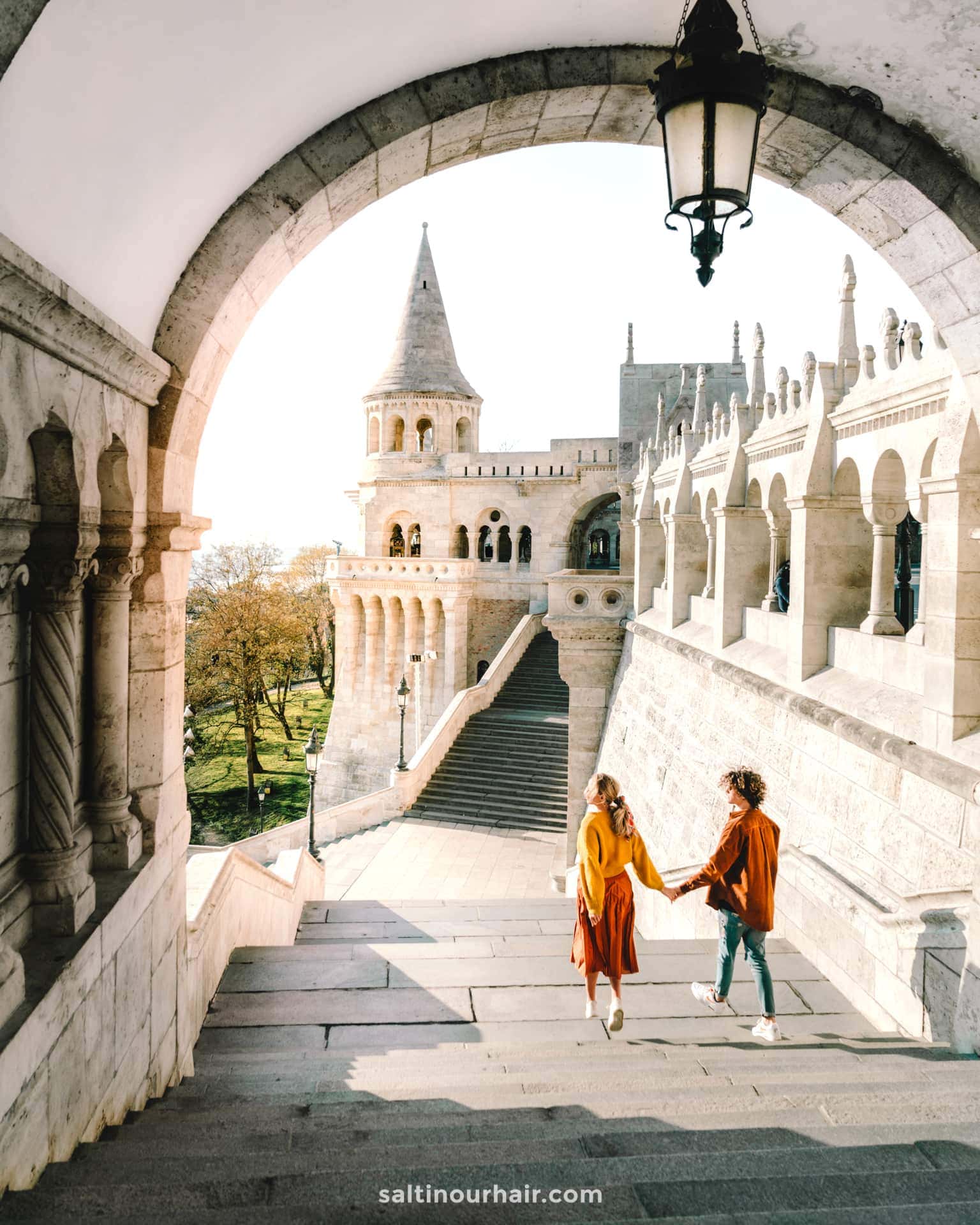
Budapest is one of Europe’s best-value capital cities, but its appeal goes far beyond price. You get dramatic river views, hilltop architecture, elegant coffeehouses, serious history, thermal bath culture, lively food neighborhoods, and nightlife that feels more creative than polished. The city is split by the Danube into hilly Buda and energetic Pest, and the smartest first trip balances both sides instead of treating Budapest like a one-neighborhood city.
This guide is built for first-time visitors who want the essentials done well: what to prioritize, how to organize the city by area, where to stay, what to eat, how to use the baths and public transport, and a practical 3-day itinerary that feels full without becoming chaotic.
Essential Info
| Category | Details |
|---|---|
| Country | Hungary |
| Currency | Hungarian Forint (HUF) |
| Language | Hungarian |
| Airport | Budapest Ferenc Liszt International Airport (BUD) |
| Best Time | April-June and September-October |
| Ideal Trip Length | 3 full days |
| Daily Budget | HUF 18,000-60,000+ depending on style |
| Power | 230V, Type C/F plugs |
Good to know: Budapest feels compact once you understand the river. Most first-timers spend their time across central Pest, the Danube promenade, the Castle District, and the Jewish Quarter.
Why Budapest Is Such a Strong Europe Pick
What makes Budapest work especially well for a first or second Europe trip:
- It looks expensive but often isn’t compared with Paris, Amsterdam, or Vienna
- The Danube gives the city structure that makes sightseeing easier to plan
- Buda and Pest feel meaningfully different, so the trip has variety without needing day trips
- Thermal baths add a signature local experience instead of just another monument checklist
- Food and nightlife are strong even if museums are not your top priority
Budapest is at its best when you mix grand sights with atmosphere: one castle-side morning, one bath session, one market stop, one evening in the Jewish Quarter, one slower café hour, and plenty of time by the river.
Understanding Budapest: Buda vs Pest
Buda
The western side of the Danube is hillier, calmer, and more scenic. This is where you go for Fisherman’s Bastion, Matthias Church, castle-area walks, and some of the best city views.
Pest
The eastern side is flatter, busier, and where most first-time travelers spend more of their active time. This is where you’ll find Parliament, St. Stephen’s Basilica, the Jewish Quarter, cafés, shopping streets, nightlife, and many of the most convenient hotels.
Smart strategy
Do not bounce back and forth across the river all day. Group your sightseeing by side of the city and let bridges connect your route naturally.
Top Experiences in Budapest
1. Fisherman’s Bastion & Castle District
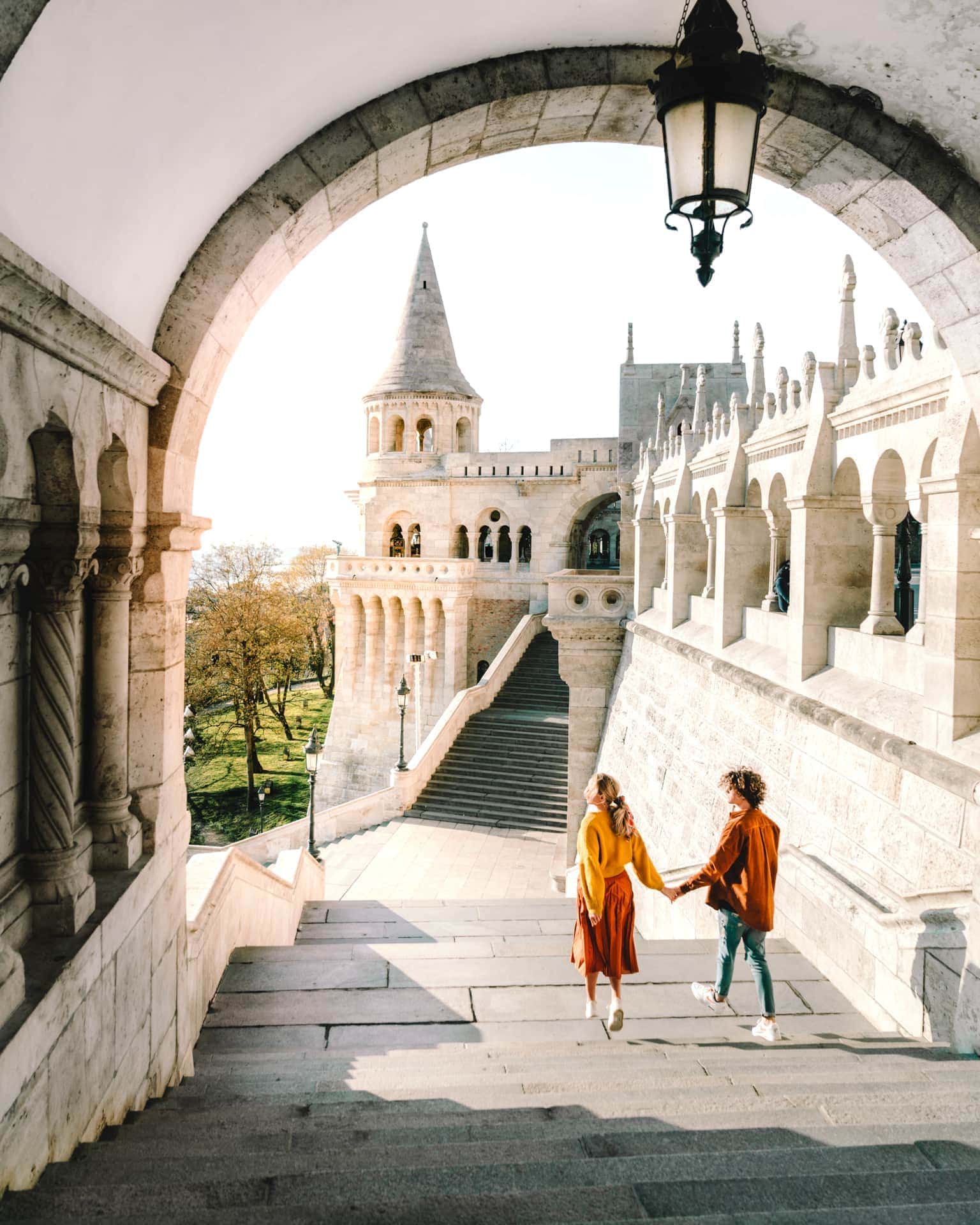
This is the classic postcard version of Budapest and still worth prioritizing early in your trip. The terraces, towers, and elevated views over the Danube make it one of the best orientation points in the city.
Why it matters:
- Outstanding skyline views across to Parliament and Pest
- Easy pairing with Matthias Church and castle-side walking
- Best area for a first “wow” moment in Budapest
Smart tip: go early in the morning if you want the views without heavy tour-bus energy.
2. Matthias Church
The colorful roof tiles and distinctive exterior make Matthias Church one of the most recognizable religious buildings in Central Europe. Even travelers who don’t normally prioritize churches tend to remember this one because of its setting and visual character.
Best for:
- Architecture lovers
- View-focused routes through Buda
- Pairing with Bastion and castle walks
3. Chain Bridge & the Danube Promenade
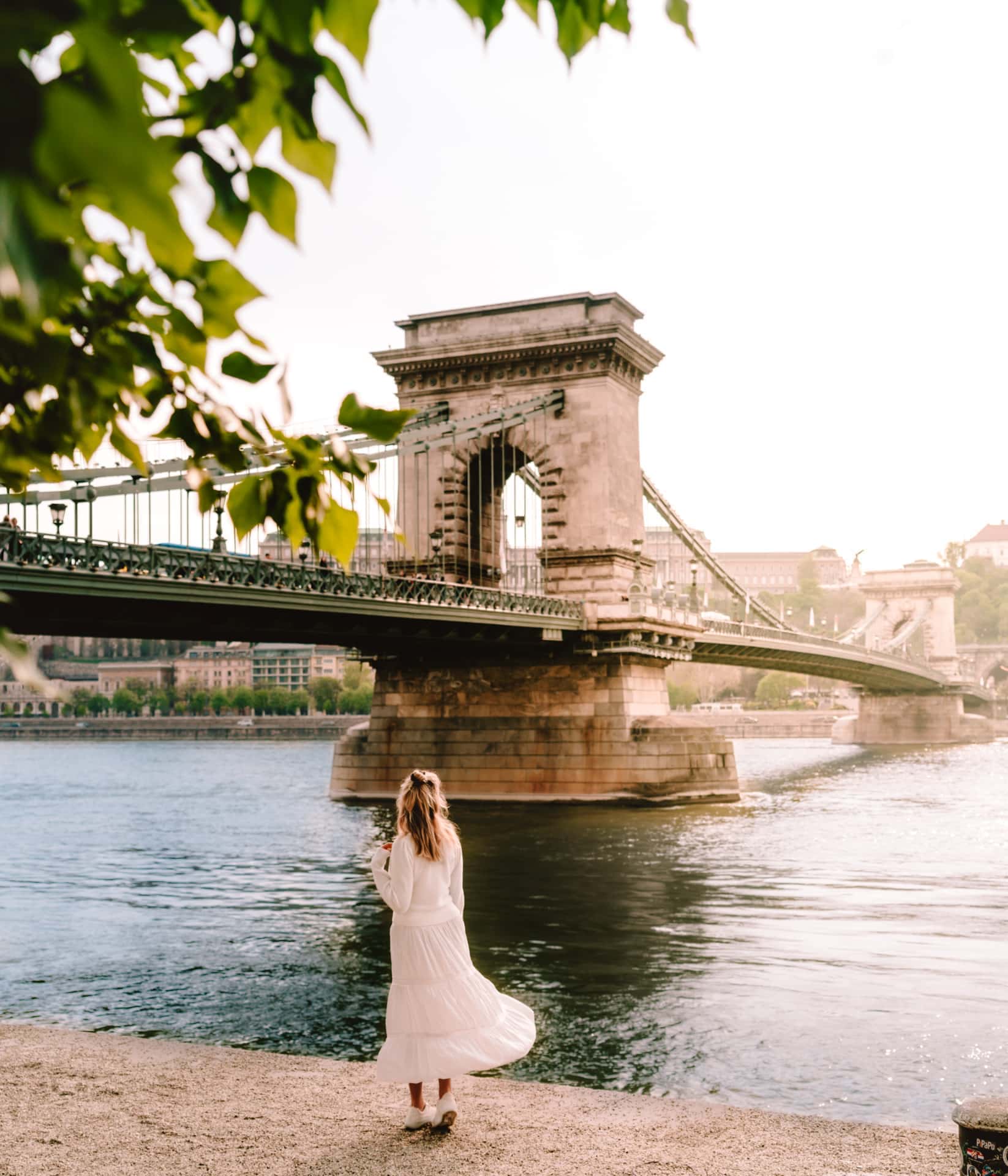
The Danube is the backbone of Budapest, and the Chain Bridge is one of the most useful ways to feel the city as a whole. Walking between Buda and Pest gives you the right sense of scale and makes the riverfront landmarks feel connected rather than separate.
Why it works so well:
- One of the city’s iconic walks
- Great transition between castle-side sightseeing and central Pest
- Strong photo views in both directions
Best time: late afternoon into blue hour.
4. Shoes on the Danube & Parliament
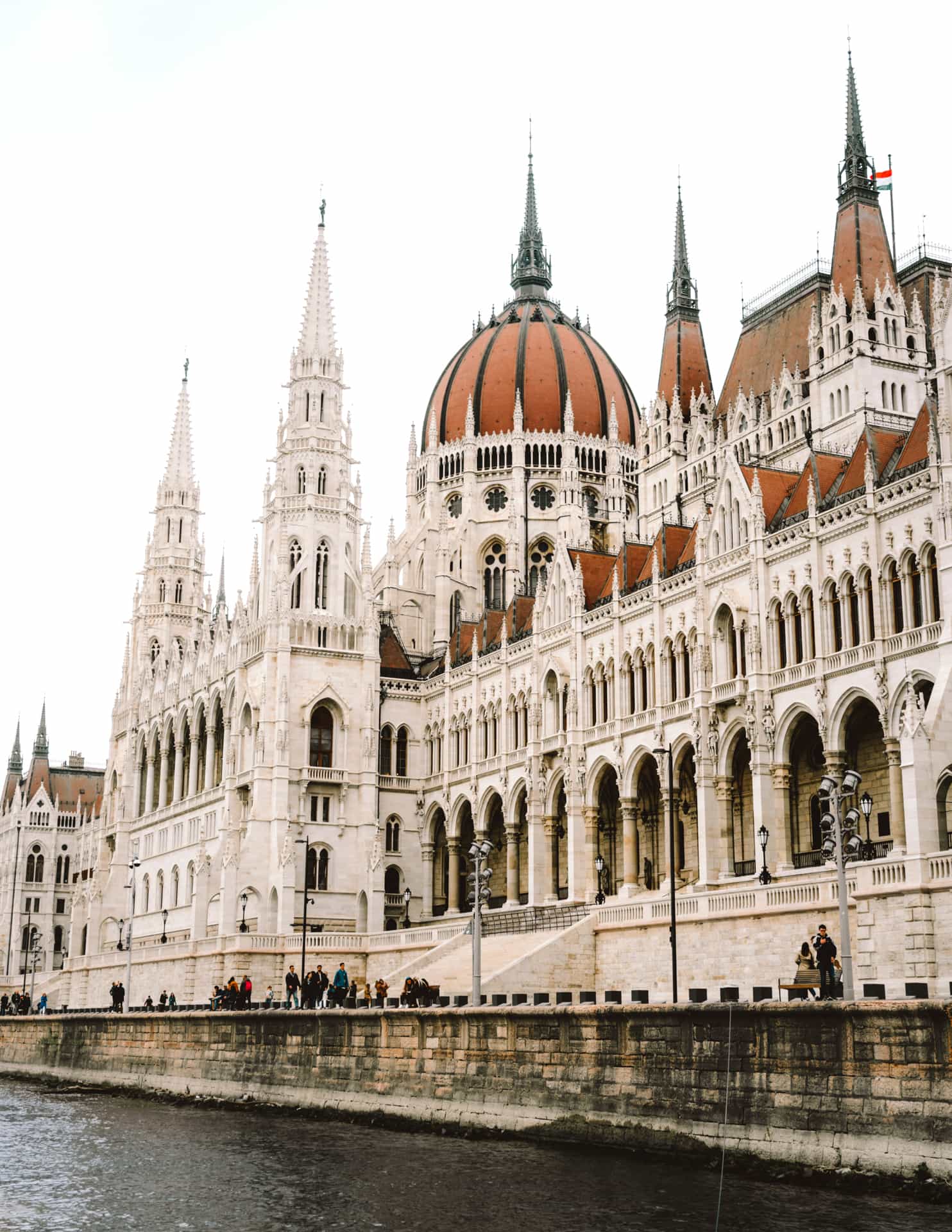
This is one of Budapest’s most important emotional and visual combinations. The Shoes on the Danube memorial is simple, direct, and affecting. A short walk away, the Hungarian Parliament Building adds the city’s grandest architectural statement.
Why this area matters:
- Strong contrast between beauty and history
- One of the best riverfront stretches in the city
- Easy to combine with bridges, basilica, or a river cruise later
If you want to tour Parliament, pre-booking is the smart move.
5. St. Stephen’s Basilica
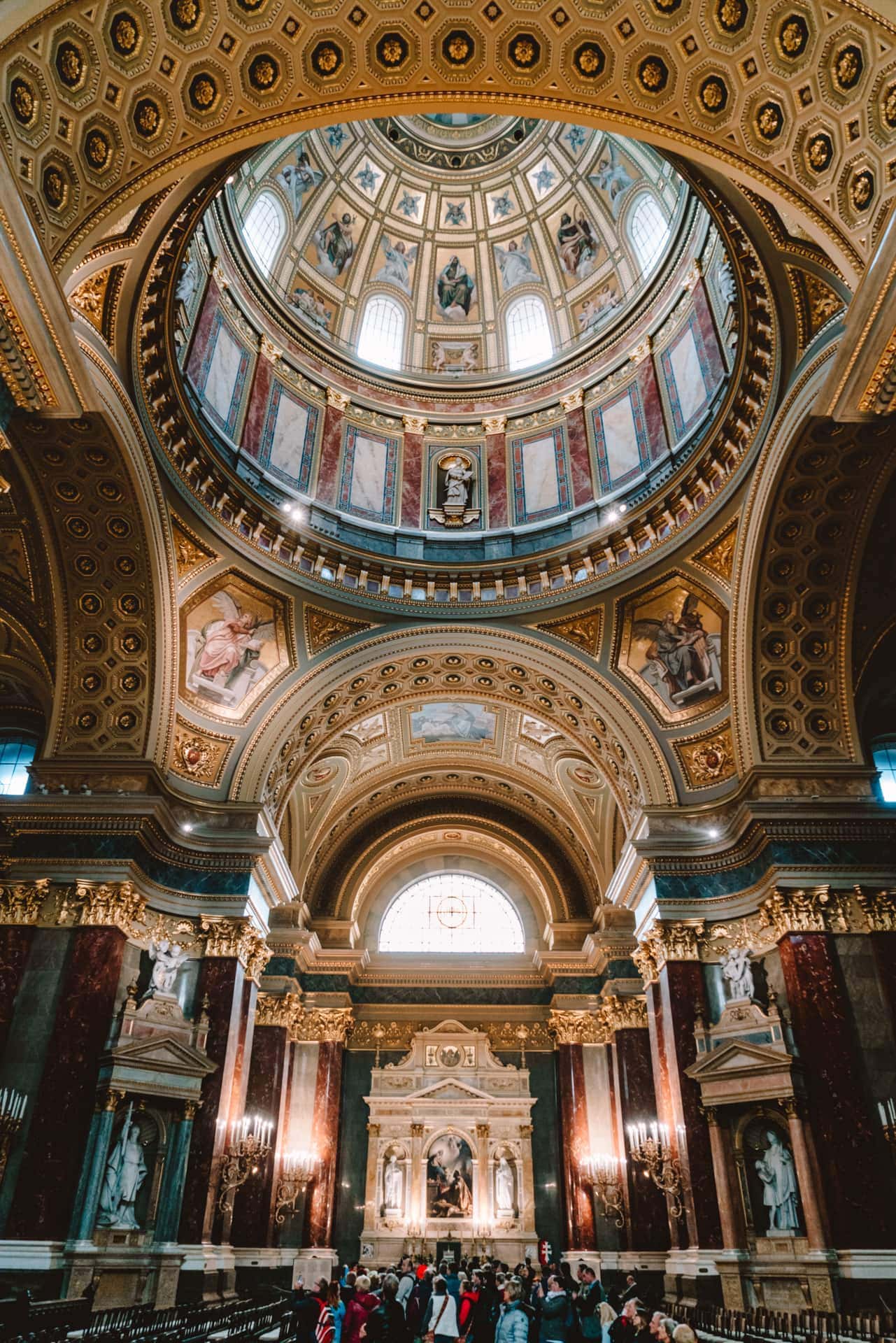
This is one of the anchors of central Pest and a good place to begin a day focused on the flatter, more urban side of the city. The church itself is impressive, and the surrounding streets make it easy to shift into cafés, shopping, and the wider center.
Why go:
- Major landmark in a very walkable part of Pest
- Strong city views if you go up
- Good pairing with breakfast, coffee, and a slow central-city morning
6. Great Market Hall & Liberty Bridge
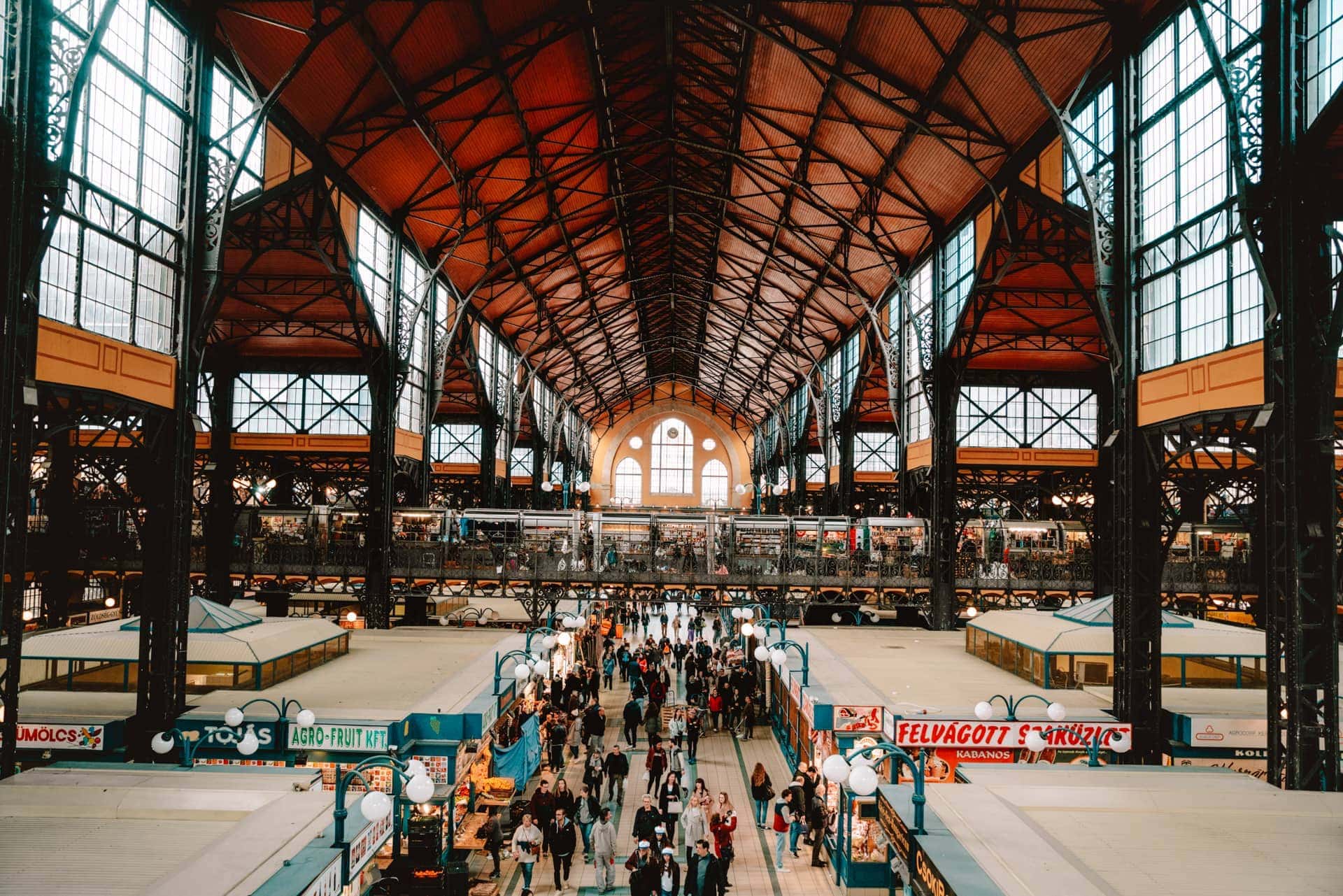
The Great Market Hall works best as a short, atmospheric stop rather than a huge time investment. It gives you a fast read on local ingredients, souvenirs, and the city’s everyday food rhythm. Right beside it, Liberty Bridge adds one of Budapest’s signature transport-and-river visuals.
Best for:
- A late-morning market walk
- Picking up paprika or edible gifts
- Combining food browsing with a scenic bridge crossing
7. Thermal Baths
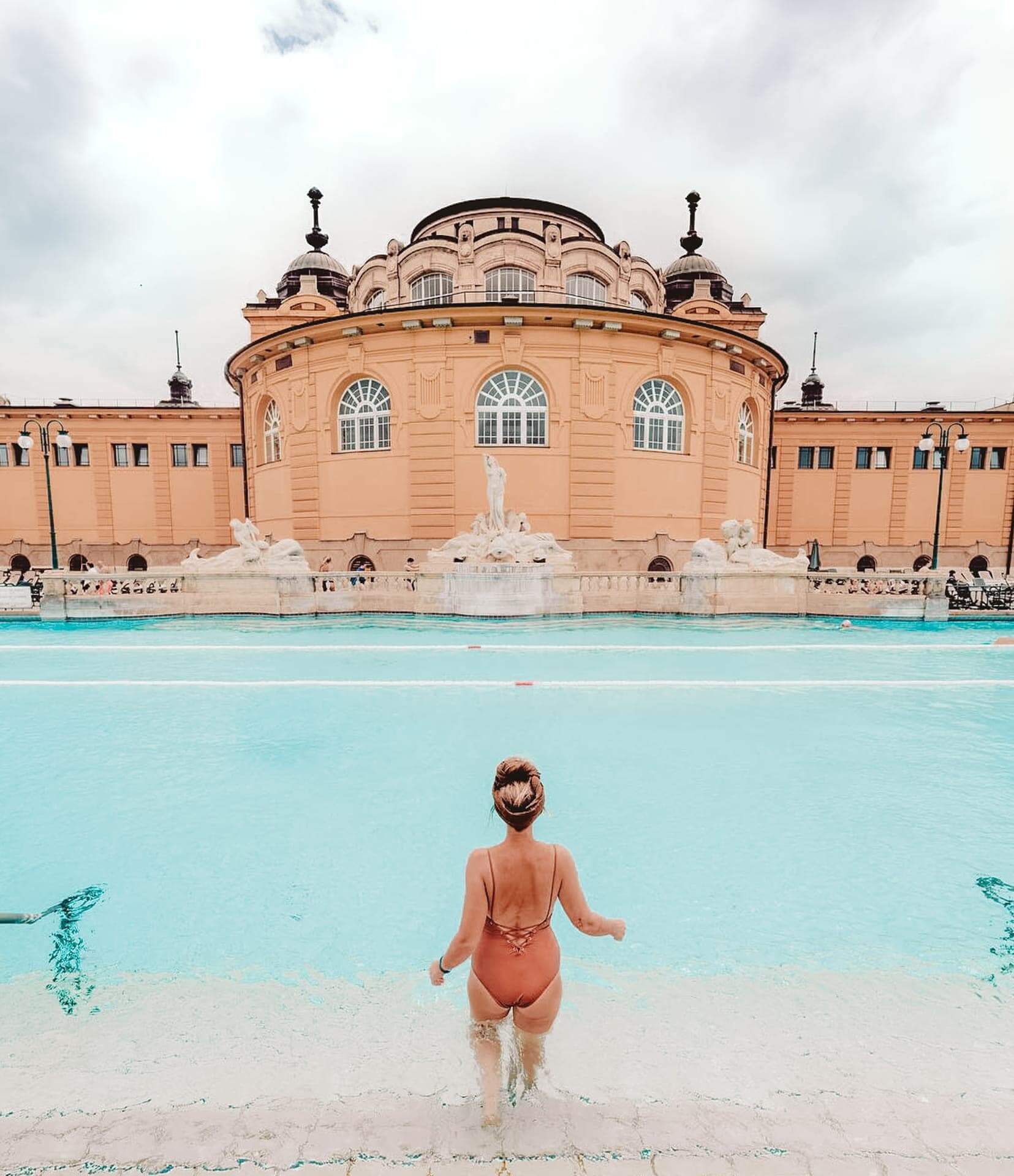
Budapest’s bath culture is not just a tourist extra — it is part of what gives the city its identity. A bath session is one of the best ways to break up a monument-heavy itinerary.
Popular choices:
- Széchenyi — the best-known and easiest for many first-timers
- Gellért — more classic and elegant in mood
- Rudas — often favored for a slightly different atmosphere
Smart tip: don’t schedule a bath as an afterthought when you’re already exhausted. Put it in the middle or late afternoon of a sightseeing day so it actually feels restorative.
8. Jewish Quarter, Street Art & Ruin Bars
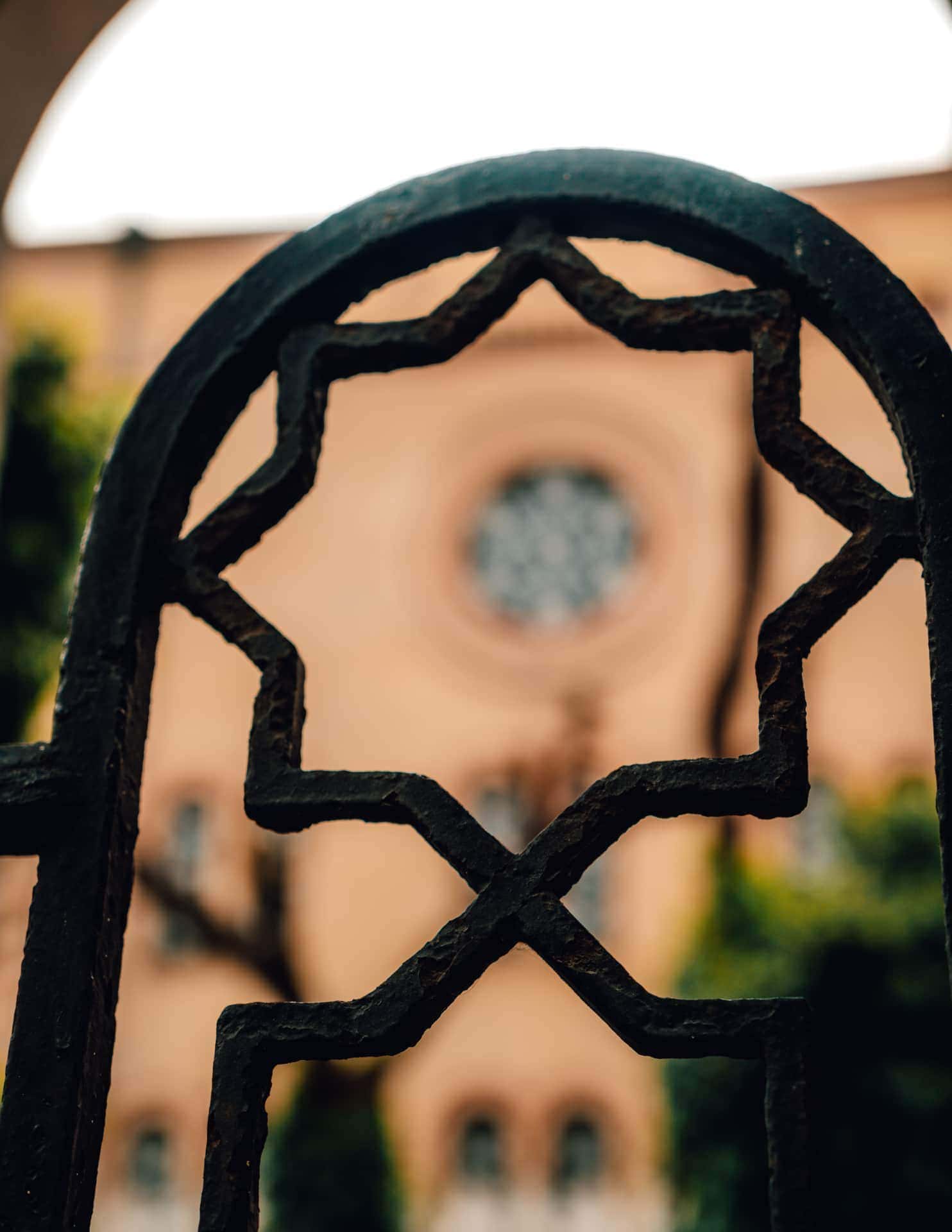
The Jewish Quarter is where Budapest shifts from stately to creative. You’ll find trendier cafés, walking routes with murals, street food options, bars, and one of the city’s strongest evening atmospheres.
What makes it worth time:
- Good daytime wandering and strong nightlife later
- Synagogues, local history, and visible street art in close reach
- Easy place to eat without making the night feel too formal
Ruin bars are the headline grabber, but the bigger reason to come here is atmosphere.
Where to Stay in Budapest
| Area | Why Stay Here | Best For |
|---|---|---|
| District V (Belváros/Lipótváros) | Central, elegant, easy for Parliament and river walks | First-timers |
| District VII (Jewish Quarter) | Best nightlife and food energy | Social travelers, younger couples |
| Near St. Stephen’s Basilica | Walkable, polished, convenient | Short city breaks |
| Castle side / Buda | Scenic and quieter | Slower-paced travelers |
| Near Keleti to central Pest | Broader hotel choice and better value | Budget-conscious travelers |
Best first-time base
Central Pest is the safest all-round pick. You’ll get easier access to food, nightlife, public transport, and most of the city’s practical movement.
Best-value strategy
If you want good prices without feeling isolated, look for stays on the Pest side between Keleti Station and the Danube River.
What to Eat in Budapest
Budapest balances traditional Hungarian flavors with a strong modern café and casual dining culture.
Things to try
- Goulash
- Chicken paprikash
- Lángos
- Chimney cake in tourist zones if you want a snack stop
- Pastries and coffeehouse desserts
- Middle Eastern and modern casual dining in the Jewish Quarter
Good food zones
- Jewish Quarter for trendy restaurants and late dinners
- Central Pest for cafés and easy first-night meals
- Near the Market Hall for casual daytime food stops
Restaurant note
Places like Mazel Tov are popular for good reason, but Budapest is best when you do not build your entire meal plan around one viral reservation. Leave room for cafés, bakeries, wine bars, and flexible lunch stops.
How to Get Around Budapest
Budapest is one of the easier European capitals to navigate.
Airport to city
There is no direct metro from the airport into the center.
Best options:
- 100E bus for a straightforward airport-to-center connection
- 200E bus plus metro connection if you want a cheaper public transport combo
- Taxi / rideshare if you arrive late or with heavy luggage
Within the city
| Transport | Best For |
|---|---|
| Walking | Riverfront, central Pest, Castle District areas |
| Metro | Longer cross-city hops |
| Tram | Scenic and practical routes along the city |
| Bus | Filling the gaps, especially beyond the core |
Why Budapest transport is good: the metro, tram, and bus network covers the city well, and first-timers rarely need a complicated strategy.
Best Time to Visit Budapest
| Season | What to Expect |
|---|---|
| Apr-Jun | Excellent for walking, views, café stops, and lighter evenings ✅ |
| Jul-Aug | Warmer, busier, and better if you love lively city energy |
| Sep-Oct | Great all-round weather and slightly calmer feel ✅ |
| Nov-Feb | Colder, moodier, better for baths and festive city breaks |
Best overall months: May, June, September
3-Day Budapest Itinerary
Day 1 — Buda Views & Danube Landmarks
- Start at Fisherman’s Bastion
- Visit Matthias Church
- Walk down toward the river
- Cross the Chain Bridge
- Pause at Shoes on the Danube
- End with the Parliament area and a riverfront evening
Day 2 — Central Pest, Market Hall & Baths
- Begin at St. Stephen’s Basilica
- Coffee stop in central Pest
- Browse the Great Market Hall
- Walk by or across Liberty Bridge
- Spend late afternoon at a thermal bath
- Keep dinner flexible depending on your energy
Day 3 — Jewish Quarter & Budapest After Dark
- Explore the Jewish Quarter by day
- Look for murals and side-street details
- Stop for casual lunch or street food
- Save the evening for ruin bars, wine, or a slower dinner
Extra day? Use it for a deeper museum visit, a longer bath session, Margaret Island, or a more relaxed café-and-viewpoint day.
Budget Breakdown
| Travel Style | Daily Budget |
|---|---|
| Budget | HUF 18,000-28,000 |
| Mid-range | HUF 35,000-60,000 |
| Comfort / Premium | HUF 65,000+ |
Why Budapest feels like good value
- Hotel prices are often friendlier than in Western Europe
- Public transport is efficient and affordable
- You can mix major sights with low-cost atmospheric walking routes
- The city still offers strong design, food, and nightlife without Paris-level pricing
Practical Tips
✅ Start Buda sights early for the best light and fewer crowds
✅ Use the river as your orientation tool — it simplifies the whole city
✅ Book Parliament or specific bath slots ahead if timing matters
✅ Keep one evening free for the Jewish Quarter instead of over-planning dinners
✅ Carry a card, but keep a little local currency for small purchases and backup situations
⚠️ Main mistake: trying to do every famous sight in one day while crossing the river repeatedly. Budapest works much better in zones.
FAQ
How many days do I need in Budapest?
3 full days is the sweet spot for a first trip. You can see the essentials in 2, but Budapest feels better with 3.
Is Budapest expensive?
Not by major European capital standards. It can still add up if you book premium hotels and paid attractions every day, but it generally offers strong value.
What should I prioritize first?
Fisherman’s Bastion, the Danube riverfront, Parliament, a thermal bath, and time in the Jewish Quarter.
Is Budapest walkable?
Yes in the core areas, but you’ll enjoy the city more if you combine walking with trams and metro for longer hops.
You May Also Like
Source: Salt in our Hair — 15 Best Things To Do in Budapest, Hungary